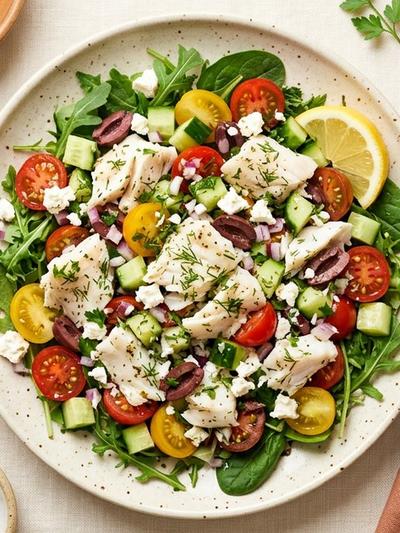
This Greek-inspired poached shrimp bowl delivers 36 grams of protein per serving while keeping fat remarkably low at just 9 grams. Shrimp is one of the most protein-dense foods available — nearly pure lean protein with minimal connective tissue, which makes it exceptionally easy to digest. Combined with fiber-rich cannellini beans and a modest portion of orzo, this bowl provides a complete, balanced meal in a format that works with reduced appetite rather than against it.
The flavor here comes from poaching, not from added fat. Shrimp cooked gently in a simmering tomato broth infused with oregano, garlic, and a splash of white wine absorb the aromatic liquid as they cook, emerging tender and deeply flavored. A scattering of briny Kalamata olives, crumbled feta, and fresh dill on top brings the unmistakable character of Greek cooking — bright, herbaceous, and satisfying without heaviness.
For people on Mounjaro or Wegovy, bowl-format meals offer a real advantage: you can see and control exactly what you are eating, and the layered components mean every bite has protein, fiber, and flavor. The poached preparation keeps the dish gentle on a sensitive stomach, and the broth base adds volume and warmth without extra calories — particularly helpful when you want a full meal experience from a smaller portion.
Why This Works on GLP-1
Each serving of this bowl provides 36 grams of complete protein, primarily from shrimp and supplemented by cannellini beans. Maintaining adequate protein intake is one of the most important nutritional priorities during GLP-1-assisted weight loss, because the reduced caloric intake that comes with appetite suppression can lead to muscle loss if protein is insufficient. Research consistently shows that consuming 25–40 grams of protein per meal helps preserve lean muscle mass, and this bowl sits squarely in that range. The amino acid profile of shrimp is particularly well-suited to muscle protein synthesis due to its high leucine content.
The cannellini beans contribute 6 grams of fiber per serving, which supports steady blood sugar response and promotes satiety between meals. Poaching is one of the gentlest cooking methods available — no added oil, no browning reactions that can create compounds irritating to a GLP-1-sensitive digestive system. The warm broth also aids hydration, which is frequently overlooked by people on Ozempic or similar medications who are eating and drinking less overall.
At 370 calories, this bowl fits comfortably within the reduced caloric needs of someone experiencing GLP-1-mediated appetite suppression, while still delivering substantial nutrition. The macronutrient balance — high protein, moderate carbohydrates from beans and orzo, and very low fat — aligns with evidence-based recommendations for body composition improvement during medicated weight management.
Ingredients (serves 2)
For the tomato-herb poaching broth:
- 1 can (14 oz / 400g) crushed tomatoes, no salt added
- 1/2 cup (120ml) low-sodium chicken broth
- 3 tablespoons (45ml) dry white wine (or additional broth)
- 3 cloves garlic, thinly sliced
- 1 teaspoon dried oregano
- 1/2 teaspoon smoked paprika
- 1/4 teaspoon red pepper flakes (optional — omit if sensitive)
- 1 teaspoon olive oil
- Pinch of salt and black pepper
For the bowl:
- 12 oz (340g) large shrimp, peeled and deveined
- 1 can (15 oz / 425g) cannellini beans, drained and rinsed
- 1/2 cup (85g) dried orzo pasta
- 1 tablespoon fresh lemon juice
- 1 teaspoon lemon zest
For topping:
- 1 oz (28g) feta cheese, crumbled
- 6 Kalamata olives, halved
- 2 tablespoons fresh dill, roughly chopped
- 1 tablespoon fresh flat-leaf parsley, chopped
- Lemon wedges for serving
Instructions
Cook the orzo:
- Bring a small pot of salted water to a boil and cook the orzo according to package directions, usually about 8–9 minutes. Drain and set aside. Cooking the orzo separately prevents it from absorbing all the poaching liquid and turning the broth starchy.
Build the poaching broth:
- Heat the olive oil in a wide, deep skillet or shallow Dutch oven over medium heat. Add the sliced garlic and cook for 30 seconds, stirring constantly — you want it fragrant but not browned, since burnt garlic turns bitter.
- Add the crushed tomatoes, chicken broth, white wine, oregano, smoked paprika, and red pepper flakes if using. Stir to combine and bring to a gentle simmer. Let the broth cook for 5 minutes so the flavors meld and the raw tomato taste cooks off.
- Stir in the drained cannellini beans and let them warm through in the broth for 2 minutes. The beans add body to the broth and absorb some of the tomato-herb flavor.
Poach the shrimp:
- Season the shrimp lightly with salt and pepper. Nestle them into the simmering broth in a single layer, pressing them gently below the surface of the liquid. This ensures even, gentle cooking.
- Reduce heat to medium-low and poach the shrimp for 3–4 minutes without stirring, until they are pink and just curled into a loose C-shape. Overcooked shrimp become rubbery and harder to digest — pull them the moment they turn opaque throughout. Remove the skillet from heat immediately.
- Stir in the lemon juice and lemon zest. Taste the broth and adjust salt if needed.
Assemble the bowls:
- Divide the cooked orzo between two bowls. Spoon the shrimp, beans, and tomato broth over the orzo, distributing evenly.
- Top each bowl with crumbled feta, halved Kalamata olives, chopped dill, and parsley. Serve with a lemon wedge on the side.
Nutrition per Serving
| Nutrient | Amount (approx.) |
|---|---|
| Calories | ~370 kcal |
| Protein | ~36g |
| Fat | ~9g |
| Carbohydrates | ~34g |
| Fiber | ~6g |
Estimates based on 6 oz shrimp, 1/2 can cannellini beans, 1/4 cup dry orzo, 1/2 oz feta, and 3 olives per serving. Using no-salt-added crushed tomatoes and low-sodium broth.
Practical Notes
This bowl meal-preps well for 3 days. Store the components separately if possible — orzo in one container, shrimp and broth with beans in another, toppings in a third. This prevents the orzo from absorbing all the liquid and becoming mushy. Reheat the shrimp and broth gently over medium-low heat or in the microwave at 50% power to avoid overcooking the shrimp.
The orzo is optional and easily swapped. If you are in an early phase of Zepbound treatment and finding grains difficult, replace the orzo with an extra half-can of cannellini beans or simply serve the poached shrimp directly in the broth as a stew. You will lose about 5 grams of carbohydrate and gain a few grams of protein and fiber with the bean swap.
Do not skip the lemon finish. Adding lemon juice and zest off the heat at the end brightens the entire dish dramatically. Acid added at the end of cooking lifts flavors in a way that cooking it into the broth cannot replicate. This small step is the difference between a good bowl and a memorable one.
For very small appetites, serve this as two courses. Sip half a cup of the warm tomato broth on its own first, then eat the shrimp, beans, and orzo as a smaller main. This stretches the meal over more time, which many GLP-1 users find more comfortable than trying to eat everything at once.
Frozen shrimp work perfectly here. In fact, most shrimp sold as "fresh" at the seafood counter was previously frozen. Buy a bag of frozen peeled and deveined large shrimp and thaw them under cold running water for 5 minutes before cooking. This is faster, cheaper, and gives you portion control — you can thaw exactly 6 oz per person.
Frequently Asked Questions
I experience nausea on my GLP-1 medication — will the tomato broth be too acidic?
Can I make this dairy-free or substitute the feta?
How long does this keep in the fridge, and can I freeze it?
What if I can only eat very small portions in my first weeks on Ozempic?
My shrimp turned out rubbery — what went wrong?
This article provides general food and nutrition guidance only. It does not constitute medical advice. Always consult your healthcare provider regarding your GLP-1 medication and individual nutritional needs.