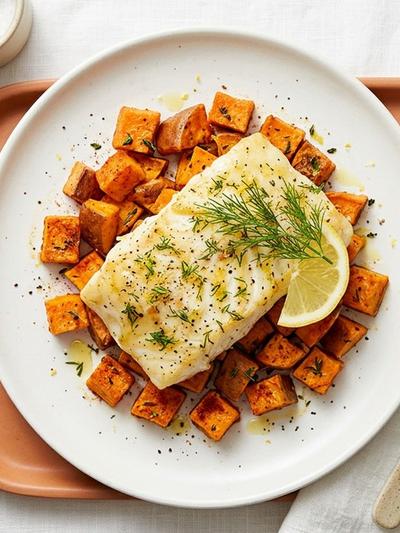
Each serving of this chilled Greek halibut plate delivers 38 grams of protein from a combination of flaked halibut fillets and chickpeas, with just 370 calories. Halibut is one of the leanest white fish available — a 5-ounce portion provides roughly 30 grams of complete protein with barely 3 grams of fat. The chickpeas add plant-based protein and gentle fiber, while cucumber, tomato, and a small amount of feta round out the plate with potassium, vitamin C, and calcium.
The flavor profile draws directly from the Greek horiatiki tradition: ripe tomatoes, crisp cucumber, briny kalamata olives, sharp red onion, and crumbled feta, all dressed in a bright lemon-oregano vinaigrette. The halibut sits at the center — its mild, clean sweetness pairs beautifully with the tangy dressing and salty Mediterranean accents. Every forkful offers a different combination of textures, from the firm flakes of chilled fish to the crunch of fresh vegetables.
For GLP-1 users, this plate solves the midday protein problem without requiring any cooking at assembly time. The halibut is poached or baked ahead and chilled, so building lunch takes under ten minutes. Cold fish is easier to tolerate than hot for many people experiencing GLP-1-related nausea, and the small, nutrient-dense portions deliver serious protein without the volume that can feel overwhelming on a suppressed appetite.
Why This Works on GLP-1
With 38 grams of protein per serving, this salad plate covers roughly half of the 60–80 gram daily protein target that most clinicians recommend during GLP-1-assisted weight loss. Preserving lean muscle mass is the single most important nutritional priority when losing weight on these medications, because the body readily breaks down muscle for energy when protein intake drops. Halibut is an exceptionally efficient protein source — it delivers more protein per calorie than chicken breast, with a complete amino acid profile including high leucine content that directly supports muscle protein synthesis.
The 5 grams of fiber per serving comes from chickpeas and fresh vegetables — moderate, gentle sources that digest without the aggressive fermentation that large portions of raw cruciferous vegetables or high-fiber legumes can cause. GLP-1 medications such as Zepbound and Ozempic slow gastric emptying significantly, so foods that sit well in the stomach matter more than maximizing fiber numbers. Chickpeas are among the best-tolerated legume options for most GLP-1 users when kept to reasonable portions.
The fat content of 15 grams per serving comes primarily from olive oil, feta cheese, and a few kalamata olives — all sources rich in monounsaturated fats. This is moderate enough to avoid the heavy, sluggish feeling that higher-fat meals cause when gastric motility is already slowed, while providing enough for satiety and absorption of fat-soluble vitamins from the vegetables.
Ingredients (serves 2)
For the chilled halibut:
- 10 oz (280g) halibut fillet, skinless
- 1/2 teaspoon fine sea salt
- 1/2 lemon, sliced (for poaching)
- 2 cups (475ml) water
For the lemon-oregano dressing:
- 1 tablespoon extra-virgin olive oil
- 1 tablespoon fresh lemon juice
- 1/2 teaspoon dried oregano
- 1 small clove garlic, finely grated
- 1/4 teaspoon fine sea salt
- pinch of black pepper
For the salad plate:
- 1/2 cup (85g) canned chickpeas, drained and rinsed
- 1 medium cucumber (about 7 oz / 200g), diced
- 1 cup (150g) cherry tomatoes, halved
- 2 tablespoons (20g) thinly sliced red onion
- 6 kalamata olives (about 20g), halved
- 1 oz (28g) crumbled feta cheese
- 1 tablespoon fresh dill, roughly chopped
- 1 teaspoon fresh mint leaves, torn (optional)
Instructions
Poach and chill the halibut (done ahead):
- Bring the water to a gentle simmer in a small saucepan. Add the lemon slices and salt. The water should be barely bubbling — aggressive boiling will toughen the fish and break it apart.
- Slide the halibut fillet into the water, reduce heat to low, and cover. Poach for 8–10 minutes until the fish is opaque throughout and flakes easily with a fork. Thicker fillets may need an extra minute or two.
- Use a slotted spoon to transfer the halibut to a plate. Let it cool to room temperature, then cover and refrigerate for at least 1 hour or up to 2 days. Chilling firms the flesh and makes it easier to flake into clean pieces.
Make the lemon-oregano dressing:
- Whisk together the olive oil, lemon juice, oregano, grated garlic, salt, and pepper in a small bowl. The dressing can be made up to 3 days ahead and stored in the fridge — the oregano flavor deepens as it sits.
Assemble the plates:
- Divide the cucumber, cherry tomatoes, chickpeas, and red onion between two plates, arranging them in loose sections rather than tossing everything together. This keeps textures distinct and lets you eat what appeals most.
- Flake the chilled halibut into large, bite-sized pieces and arrange over the vegetables. Handle gently — halibut breaks into beautiful natural flakes if you follow the grain of the fish.
- Scatter the kalamata olive halves and crumbled feta over both plates. Add the chopped dill and torn mint.
- Drizzle the lemon-oregano dressing evenly over everything. Serve immediately, or cover and refrigerate for up to 4 hours if packing for later.
Nutrition per Serving
| Nutrient | Amount (approx.) |
|---|---|
| Calories | ~370 kcal |
| Protein | ~38g |
| Fat | ~15g |
| Carbohydrates | ~18g |
| Fiber | ~5g |
Estimates based on 5 oz raw halibut per serving, 1/4 cup chickpeas per serving, 1/2 oz feta per serving, and 1/2 tablespoon olive oil per serving. Actual values may vary with fillet thickness and specific brands used.
Practical Notes
Prep the halibut on your meal prep day. Poached halibut keeps well in the fridge for up to 2 days, tightly covered. You can poach it alongside any other protein you are preparing for the week — it takes only 10 minutes of hands-on time and makes cold assembly lunches possible all week.
Skip the poaching if you have leftover baked or grilled fish. Any cooked halibut works here, and this is an excellent way to repurpose leftover white fish from dinner. Cod, sea bass, or even grilled chicken breast can substitute if halibut is unavailable or too expensive — adjust the protein count accordingly.
Start with half a plate if your appetite is very low. This recipe portions well. If you are early in your GLP-1 treatment and struggling to eat full servings, plate half the fish and vegetables and save the rest for a second small meal later. The protein still counts whether you eat it in one sitting or two.
Keep the dressing separate if packing for work. Tomatoes and cucumber release water as they sit, and the dressing accelerates this. Pack the dressing in a small container and drizzle it on just before eating to keep everything crisp and fresh.
Add a tablespoon of capers for extra flavor without extra calories. Capers are a traditional Greek pantry ingredient that adds briny, vinegary punch with essentially zero calories. They pair especially well with the mild halibut and creamy feta.
Frequently Asked Questions
Can I eat this if I'm experiencing nausea from my GLP-1 medication?
What can I use instead of halibut?
How long does this keep in the fridge?
Is one serving enough protein if I can only eat a small amount?
Do I need to remove the skin from the halibut before poaching?
This article provides general food and nutrition guidance only. It does not constitute medical advice. Always consult your healthcare provider regarding your GLP-1 medication and individual nutritional needs.