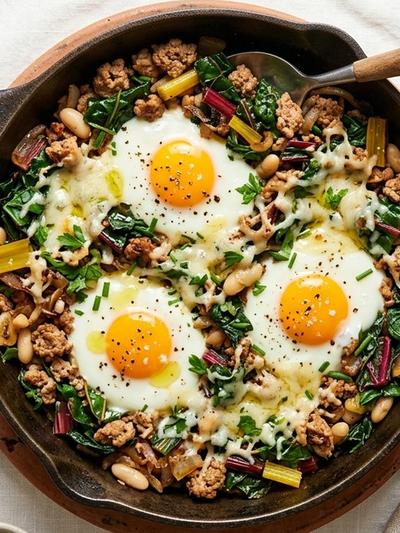
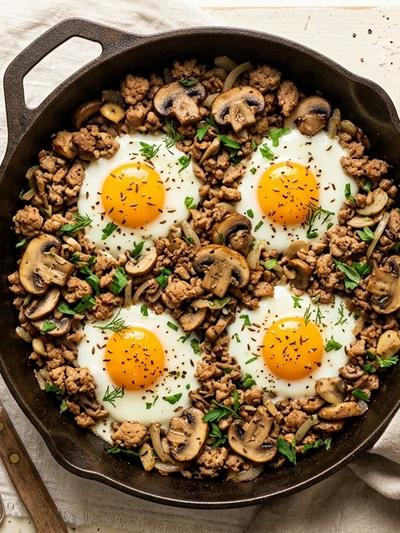
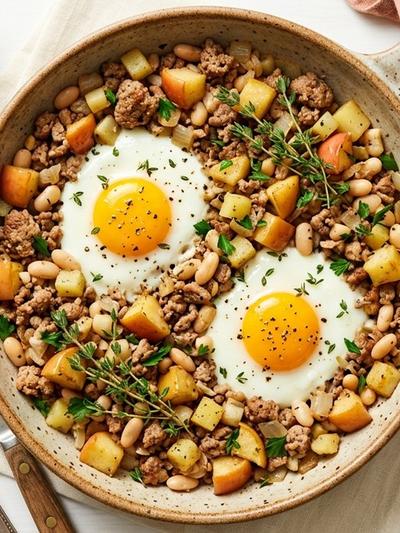
This one-skillet German farmer's breakfast delivers 33g of protein per serving from a combination of lean ground turkey and whole eggs, all for under 400 calories. The dish draws on Bauernfrühstück — a traditional German farmhouse breakfast built around pan-fried potatoes, onions, and eggs — but swaps the usual bacon or ham for seasoned ground turkey to keep the fat in check. Each serving provides a solid balance of slow-digesting carbohydrates from Yukon Gold potatoes, complete protein from two sources, and a generous handful of micronutrients from bell pepper and spinach.
Sweet paprika and a whisper of nutmeg give the turkey a warm, distinctly Central European character, while the diced potatoes develop golden, crispy edges in the skillet before the eggs are folded through. Fresh chives and flat-leaf parsley, stirred in right at the end, brighten every bite with a clean, herbaceous note. The contrast between the crispy potato pieces, the tender seasoned turkey, and the just-set eggs makes this one of those breakfasts that feels indulgent but is built on solid nutritional foundations.
For GLP-1 users, the moderate portion size is satisfying without overwhelming a reduced appetite. The combination of protein and complex carbohydrates provides steady energy through the morning, and everything cooks in a single skillet in about 25 minutes. There is nothing heavy, greasy, or overly rich here — just well-seasoned, honest food that sits comfortably.
Why This Works on GLP-1
Each serving provides 33g of protein from two complementary sources: lean ground turkey supplies the bulk at roughly 21g, while the eggs contribute another 12g of highly bioavailable protein with all essential amino acids. Maintaining adequate protein intake is one of the most important nutritional priorities for people on Mounjaro, Wegovy, or similar GLP-1 medications, because reduced calorie intake can lead to muscle loss if protein stays too low. This single breakfast covers roughly half the minimum daily protein target most dietitians recommend for GLP-1 patients, and it does so in a portion small enough for a suppressed morning appetite.
The ingredients are gentle on digestion by design. Potatoes are one of the most easily tolerated carbohydrate sources for people experiencing GLP-1 side effects, and cooking the spinach briefly in the skillet softens the fibers enough to avoid any raw-vegetable discomfort. The modest fat content — 17g per serving, mostly from the eggs and a small amount of olive oil — keeps the dish from sitting heavily in a stomach where gastric emptying is already slowed.
Turkey is notably rich in B vitamins, particularly B6 and niacin, which support energy metabolism — something that matters when you are eating less overall. The eggs add choline, a nutrient many adults fall short on, which plays a role in liver function and fat metabolism. At 375 calories, this breakfast leaves substantial room in the daily budget for two more balanced meals and a protein-rich snack.
Ingredients (serves 2)
For the skillet:
- 8 oz (225g) lean ground turkey (93% lean)
- 3 large eggs
- 1 medium Yukon Gold potato, about 5 oz (150g), diced into 1 cm cubes
- 1 small yellow onion, finely diced
- 1 small red bell pepper, diced
- 2 cups (60g) baby spinach
- 2 tsp olive oil
- 1 tsp sweet paprika
- Pinch of freshly grated nutmeg
- Salt and freshly ground black pepper to taste
To finish:
- 2 tbsp fresh chives, finely snipped
- 1 tbsp fresh flat-leaf parsley, chopped
- 1 tsp Dijon mustard (optional, for serving)
Instructions
Cook the potatoes:
- Dice the potato into small, even cubes — about 1 cm — so they cook quickly and develop crispy edges. Pat them dry with a paper towel, which helps them brown rather than steam.
- Heat 1 tsp of the olive oil in a 25 cm (10-inch) nonstick skillet over medium heat. Add the potato cubes in a single layer and cook for 8–10 minutes, turning occasionally, until golden and fork-tender. Season lightly with salt and remove to a plate.
Brown the turkey:
- Add the remaining 1 tsp olive oil to the same skillet. Crumble in the ground turkey and cook over medium-high heat for 4–5 minutes, breaking it into small pieces with a wooden spoon. The turkey should be cooked through with some light browning.
- Add the diced onion and bell pepper. Cook for 2–3 minutes until the onion turns translucent and the pepper softens slightly.
- Stir in the sweet paprika and nutmeg. Cook for 30 seconds to bloom the spices — this releases their aromatic oils and deepens the flavor considerably.
Bring it together with eggs:
- Return the potatoes to the skillet and toss everything together. Add the baby spinach and stir until it wilts, about 1 minute.
- Beat the 3 eggs in a small bowl with a pinch of salt and pepper. Pour them evenly over the skillet contents. Let the eggs sit undisturbed for about 30 seconds until the edges begin to set, then gently fold and stir with a spatula for 2–3 minutes until the eggs are just set but still slightly creamy. Avoid overcooking — the residual heat will continue firming them.
- Remove from heat. Scatter the chives and parsley over the top. Serve immediately, with a small smear of Dijon mustard on the side if you like that classic German sharpness.
Nutrition per Serving
| Nutrient | Amount (approx.) |
|---|---|
| Calories | ~375 kcal |
| Protein | ~33g |
| Fat | ~17g |
| Carbohydrates | ~22g |
| Fiber | ~3g |
Estimates based on 93% lean ground turkey, large eggs, and standard produce. Actual values may vary with specific brands and potato size.
Practical Notes
Make it meal prep friendly. This skillet is best fresh, but you can prep the components the night before: dice the potato and store it in water in the fridge (drain and pat dry before cooking), chop the onion and pepper, and measure out the spices. In the morning, the hands-on time drops to about 15 minutes.
Adjust the eggs to your appetite. If your morning appetite is very small, use 2 eggs instead of 3 and reduce the turkey to 6 oz. This brings the serving down to roughly 290 calories and 27g protein — still a strong breakfast for early-phase GLP-1 users who cannot manage a full portion.
The potato size matters. Cutting the potato into small, even cubes is the difference between a 25-minute breakfast and a 40-minute one. Larger pieces take much longer to cook through. If you are in a real hurry, you can microwave the diced potato for 2 minutes before adding it to the skillet — it will still develop some color.
Swap the protein if needed. Extra-lean ground chicken works identically here, with very similar nutrition. For a vegetarian version, crumbled firm tofu seasoned with the same paprika and nutmeg makes a surprisingly good stand-in, though the protein will drop by a few grams per serving.
Eat slowly and stop when satisfied. GLP-1 medications change how quickly you feel full, and a dish with this much protein and starch will be deeply satiating. Plate a full serving but give yourself permission to save what you cannot finish — it reheats well in a skillet over medium-low heat with a splash of water to keep the eggs from drying out.
Frequently Asked Questions
I'm in the first few weeks of Ozempic and have very little appetite in the morning. Can I still make this work?
Can I use turkey breast instead of ground turkey?
How long does this keep, and how do I reheat it?
What if I find the portion too filling on Zepbound or a higher dose?
Why do you bloom the paprika and nutmeg before adding the eggs?
This article provides general food and nutrition guidance only. It does not constitute medical advice. Always consult your healthcare provider regarding your GLP-1 medication and individual nutritional needs.