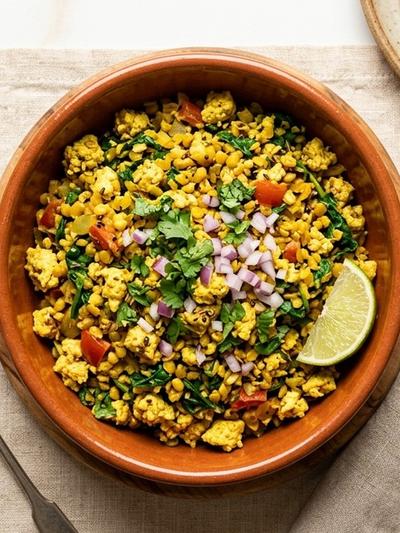
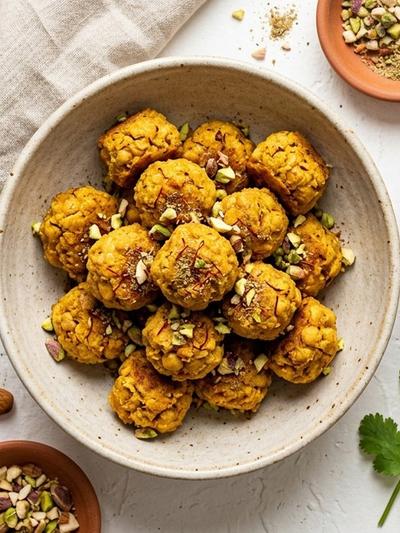
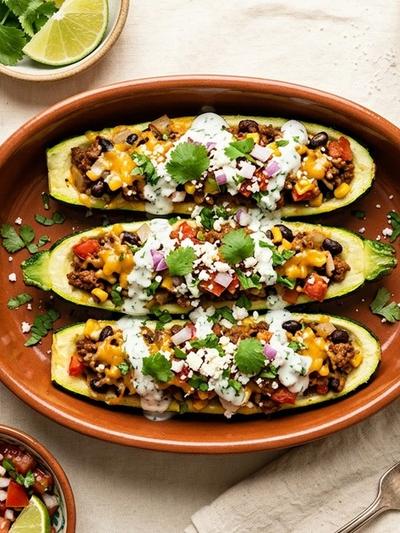
This Indian-inspired baked bowl delivers 28 grams of protein per serving by combining ricotta cheese with chickpeas — two complementary protein sources that together provide a complete amino acid profile. Each serving also contributes 7 grams of fiber from the chickpeas and roasted cauliflower, alongside a solid dose of calcium and B vitamins from the ricotta. The warming spice blend of garam masala, turmeric, and cumin gives the dish real depth without relying on heavy cream or oil.
The flavor here works on multiple levels. Ricotta gets seasoned with garam masala and a pinch of turmeric, then baked until the top turns golden and slightly firm while the center stays creamy. Beneath it, roasted cauliflower florets develop nutty, caramelized edges, and chickpeas crisp up in the oven's dry heat. A squeeze of lemon and a scattering of fresh cilantro tie everything together with brightness.
For people on GLP-1 medications like Mounjaro or Wegovy, this bowl is designed around the reality of reduced appetite. The portions are moderate but nutrient-dense — you get substantial protein and fiber without needing to eat a large volume. The ricotta is naturally soft and easy to digest, while the mild spice level avoids triggering the nausea that can accompany strongly flavored foods during early GLP-1 treatment.
Why This Works on GLP-1
Each serving provides 28 grams of protein, which is critical for anyone experiencing GLP-1-assisted weight loss. When your body is in a caloric deficit — even an unintentional one from reduced appetite — adequate protein intake helps preserve lean muscle mass. Ricotta contributes about 14 grams of protein per half-cup serving, while the chickpeas add another substantial portion. This dual-source approach also means you get both animal and plant proteins, covering a broader amino acid spectrum in a single meal.
The 7 grams of fiber per serving comes primarily from the chickpeas and cauliflower, both of which are gentle enough for most GLP-1 users. Unlike raw cruciferous vegetables, roasted cauliflower is significantly easier on the digestive system because heat breaks down the complex sugars that cause bloating. The fiber content helps maintain steady blood sugar, which complements the glycemic effects of medications like Ozempic and Zepbound.
Turmeric and cumin aren't just flavor additions — both have well-documented anti-inflammatory properties. The calcium content from the ricotta (roughly 25% of daily value per serving) is also worth noting, since adequate calcium intake supports bone density during periods of weight loss. At 345 calories per serving, the bowl provides meaningful nutrition without excess energy.
Ingredients (serves 4)
For the spiced ricotta:
- 2 cups (500g) whole-milk ricotta cheese
- 1 teaspoon garam masala
- 1/2 teaspoon ground turmeric
- 1/2 teaspoon ground cumin
- 1/4 teaspoon fine sea salt
- 1 large egg
- 1 tablespoon lemon juice
For the roasted vegetables:
- 1 medium head cauliflower (about 1 1/2 lbs / 680g), cut into small florets
- 1 can (15 oz / 425g) chickpeas, drained and rinsed
- 1 tablespoon olive oil
- 1 teaspoon ground cumin
- 1/2 teaspoon smoked paprika
- 1/4 teaspoon fine sea salt
- Pinch of black pepper
For serving:
- 2 cups (60g) baby spinach
- 1 small lemon, cut into wedges
- 1/4 cup (10g) fresh cilantro, roughly chopped
- 2 tablespoons plain Greek yogurt (optional)
Instructions
Preheat and prepare the vegetables:
- Set your oven to 425°F (220°C) and line a large rimmed baking sheet with parchment paper. A hot oven is essential here — it caramelizes the cauliflower edges and crisps the chickpeas rather than steaming them.
- Spread the cauliflower florets and drained chickpeas across the baking sheet. Drizzle with olive oil, then sprinkle with cumin, smoked paprika, salt, and pepper. Toss everything with your hands until evenly coated, then spread into a single layer with space between pieces.
- Roast for 20 minutes, tossing once halfway through, until the cauliflower edges are golden brown and the chickpeas have started to firm up and split slightly.
Mix and bake the spiced ricotta:
- While the vegetables roast, combine the ricotta, garam masala, turmeric, cumin, salt, egg, and lemon juice in a medium bowl. Stir until the spices are evenly distributed — the mixture should turn a warm golden color from the turmeric. The egg helps the ricotta set slightly in the oven so it holds its shape in the bowl.
- Divide the ricotta mixture among four small oven-safe ramekins or pile it into four mounds on a separate parchment-lined baking sheet. If using the sheet method, form the ricotta into thick rounds about 3 inches (8cm) across.
- When the vegetables have 10 minutes remaining, place the ricotta in the oven on a separate rack. Bake for 10–12 minutes until the top is lightly golden and just set. The center should still be soft and creamy — overbaking will make it dry and grainy.
Assemble the bowls:
- Divide the baby spinach among four bowls. The residual heat from the roasted vegetables will gently wilt the spinach, which makes it easier to digest than raw leaves.
- Spoon the roasted cauliflower and chickpeas over the spinach, then place a round of baked spiced ricotta on top of each bowl.
- Finish with a squeeze of fresh lemon juice, a scattering of cilantro, and a small dollop of Greek yogurt if using. Serve immediately while the ricotta is still warm.
Nutrition per Serving
| Nutrient | Amount (approx.) |
|---|---|
| Calories | ~345 kcal |
| Protein | ~28g |
| Fat | ~14g |
| Carbohydrates | ~26g |
| Fiber | ~7g |
Estimates based on whole-milk ricotta, canned chickpeas, and the optional Greek yogurt dollop included. Using part-skim ricotta would reduce calories by approximately 30 per serving and fat by 3g.
Practical Notes
Make it a meal prep container. The roasted cauliflower and chickpeas store well in airtight containers for up to 4 days in the refrigerator. The spiced ricotta mixture can be prepared ahead and refrigerated unbaked — just add 2–3 minutes to the baking time when cooking from cold. Assemble fresh bowls each day by reheating the vegetables and baking a portion of ricotta.
Adjust the spice level for early GLP-1 phases. If you're in the first few weeks of treatment and experiencing nausea sensitivity, reduce the garam masala to half a teaspoon and skip the smoked paprika entirely. The turmeric and cumin are mild enough for most people, and you can always increase the spicing as your tolerance improves.
Swap the cauliflower for sweet potato. Diced sweet potato (same weight, slightly smaller pieces) works beautifully here and adds natural sweetness that pairs well with the garam masala. It will increase the carbohydrate count by about 10 grams per serving but also adds more vitamin A and a slightly higher fiber content.
Use the ramekin method for neater portions. Baking the ricotta in individual ramekins gives you a cleaner presentation and more consistent texture. Lightly oil the ramekins first, and let the ricotta cool for 2 minutes before inverting onto the bowl. This approach also makes it easier to bake exact portions for one or two people.
Eat this as a smaller lunch portion. If your appetite is very reduced, halve the serving — one ramekin of ricotta with a smaller scoop of vegetables still gives you about 14 grams of protein. Pair it with a glass of bone broth or a small cup of lentil soup to bring the protein closer to 20 grams without adding much volume to the plate.
Frequently Asked Questions
Will the spices in this bowl cause nausea on GLP-1 medications?
Can I use cottage cheese instead of ricotta?
How long do leftovers last, and how should I reheat them?
What if I can only eat a very small portion right now?
Can I roast the cauliflower and chickpeas on the same tray as the ricotta?
This article provides general food and nutrition guidance only. It does not constitute medical advice. Always consult your healthcare provider regarding your GLP-1 medication and individual nutritional needs.