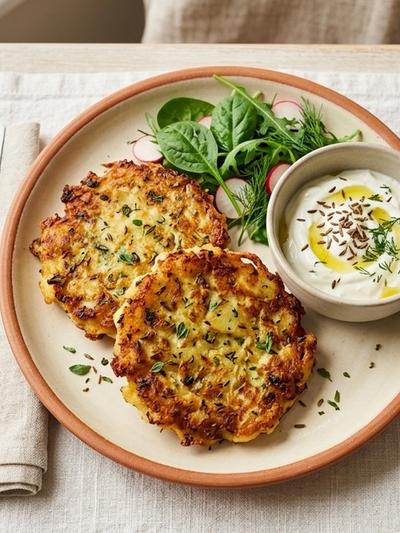
Each serving of these Peruvian-inspired cottage cheese bites delivers 30 grams of protein from a combination of low-fat cottage cheese and egg, bound with cooked quinoa and seasoned with cumin, aji amarillo, and fresh lime zest. The accompanying roasted sweet potato and bell pepper add 6 grams of fiber along with vitamin A, vitamin C, and potassium. This is a complete, balanced dinner plate assembled from a single air fryer basket.
The flavor profile draws from Peru's tradition of bold, citrus-forward cooking. Aji amarillo paste brings a warm, fruity heat that pairs naturally with the mild tang of cottage cheese, while toasted cumin and a squeeze of lime pull the whole dish into distinctly Peruvian territory. The bites crisp beautifully in the air fryer, developing a golden crust around a soft, protein-dense center that contrasts with the caramelized edges of the roasted vegetables.
For people on Wegovy or Mounjaro, this recipe solves several common problems at once. The bites are naturally portion-controlled — you eat three or four small pieces rather than cutting into a large protein — which suits reduced appetites. The ingredients are gentle on digestion, avoiding heavy cream, excess oil, or dense starches that can trigger nausea. And because everything cooks in the air fryer with minimal fat, the calorie count stays moderate while the protein stays high.
Why This Works on GLP-1
The 30 grams of protein per serving comes primarily from cottage cheese, one of the most bioavailable dairy protein sources. During GLP-1-assisted weight loss, maintaining adequate protein intake is critical for preserving lean muscle mass. Research consistently shows that adults losing weight benefit from consuming 25 to 40 grams of protein per meal to stimulate muscle protein synthesis. These bites hit that range without relying on large meat portions that some GLP-1 users find difficult to finish.
The 6 grams of fiber per serving comes from quinoa, sweet potato, and bell pepper — all gentle, soluble-fiber-rich foods that support digestion without causing the bloating that high-fiber supplements or raw cruciferous vegetables sometimes trigger. This matters because GLP-1 medications already slow gastric emptying, and aggressive fiber intake can compound discomfort.
Cottage cheese also provides roughly 15 percent of your daily calcium per serving, a nutrient worth monitoring during weight loss when bone density can be affected. The sweet potato adds beta-carotene and potassium, nutrients that support overall metabolic health. The aji amarillo paste contains capsaicinoids, which some studies associate with modest thermogenic effects, though the primary benefit here is flavor without added fat.
Ingredients (serves 2)
For the cottage cheese bites:
- 1 1/3 cups (300g) low-fat cottage cheese, well drained
- 1 large egg
- 1/2 cup (85g) cooked quinoa, cooled
- 2 tablespoons (15g) oat flour
- 1 tablespoon aji amarillo paste
- 1 teaspoon ground cumin
- 1/2 teaspoon garlic powder
- 1/2 teaspoon smoked paprika
- Zest of 1 lime
- 1/4 teaspoon fine sea salt
- Freshly ground black pepper
For the roasted vegetables:
- 1 medium sweet potato (about 150g), cut into 1/2-inch wedges
- 1 large red bell pepper, cut into wide strips
- 1 small zucchini (about 120g), sliced into half-moons
- 2 teaspoons olive oil
- 1/2 teaspoon ground cumin
- 1/4 teaspoon aji amarillo paste or chili powder
- Pinch of salt
For serving:
- 2 tablespoons plain nonfat Greek yogurt
- 1 tablespoon fresh lime juice
- 2 tablespoons fresh cilantro, chopped
- Lime wedges
Instructions
Drain the cottage cheese and prepare the batter:
Place the cottage cheese in a fine-mesh strainer set over a bowl and press gently with a spatula to remove excess liquid. Let it drain for 5 minutes. Removing this moisture is essential — wet cottage cheese will make the bites fall apart rather than holding their shape.
Transfer the drained cottage cheese to a mixing bowl. Add the egg, cooked quinoa, oat flour, aji amarillo paste, cumin, garlic powder, smoked paprika, lime zest, salt, and pepper. Stir until evenly combined. The mixture will be soft but scoopable, similar to thick pancake batter.
Using a large spoon or 2-tablespoon scoop, form the mixture into 8 compact patties, about 2 inches wide and 3/4 inch thick. Place them on a plate lined with parchment. If the mixture feels too loose, refrigerate for 10 minutes to firm up slightly.
Prepare the vegetables:
- Toss the sweet potato wedges, bell pepper strips, and zucchini slices with olive oil, cumin, aji amarillo paste, and salt in a bowl. Make sure every piece is lightly coated — the thin oil layer is what drives caramelization in the air fryer's circulating heat.
Air fry the vegetables first:
- Preheat the air fryer to 390°F (200°C) for 3 minutes. Arrange the sweet potato wedges in a single layer in the basket. Air fry for 8 minutes, then add the bell pepper and zucchini. Cook for another 5 minutes until everything is tender with charred edges. Transfer the vegetables to a plate and tent with foil.
Air fry the cottage cheese bites:
Lightly mist the air fryer basket with cooking spray or brush with a thin layer of oil. Place the cottage cheese bites in the basket, leaving 1/2 inch between each — they need air circulation on all sides to crisp properly.
Air fry at 375°F (190°C) for 7 minutes. Carefully flip each bite using a thin spatula, then cook for another 5 to 6 minutes until both sides are golden brown and firm to the touch. The exterior should be lightly crisp while the center stays soft.
Assemble and serve:
- Stir together the Greek yogurt and lime juice in a small bowl. Divide the roasted vegetables between two plates, arrange 4 cottage cheese bites alongside, and drizzle with the lime yogurt. Scatter cilantro over everything and serve with lime wedges.
Nutrition per Serving
| Nutrient | Amount (approx.) |
|---|---|
| Calories | ~395 kcal |
| Protein | ~30g |
| Fat | ~12g |
| Carbohydrates | ~38g |
| Fiber | ~6g |
Based on low-fat cottage cheese (2% milkfat), one large egg, and 2 teaspoons total olive oil split between two servings. Aji amarillo paste contributes negligible calories.
Practical Notes
Draining cottage cheese is non-negotiable. If you skip this step, the bites will release water in the air fryer and steam rather than crisp. For even better results, wrap the cottage cheese in a clean kitchen towel and squeeze gently. You want it as dry as ricotta, not soupy.
Aji amarillo paste substitution. If you cannot find aji amarillo paste (available at Latin grocery stores or online), substitute 1 teaspoon of chipotle in adobo blended with 1/2 teaspoon of yellow mustard. It won't taste identical, but it captures the fruity warmth and mild heat that defines this dish. Sriracha is not a good substitute here — its vinegar profile clashes with the lime and cumin.
Meal prep storage. The cottage cheese bites refrigerate well for up to 3 days in an airtight container. Reheat them in the air fryer at 350°F for 4 minutes to restore crispness. Microwaving works but produces a softer texture. Store the vegetables separately from the bites to prevent sogginess.
If your appetite is very small. Eat 2 bites with half the vegetables as a smaller portion — that still provides roughly 15 grams of protein. Save the rest for a second meal later in the day. Many Ozempic and Zepbound users find they prefer two smaller meals over one full plate, and this recipe splits cleanly in half.
Batch cooking for the week. Double the bite recipe and freeze uncooked patties on a parchment-lined tray. Once frozen solid, transfer to a freezer bag. Cook directly from frozen in the air fryer at 375°F for 14 to 16 minutes, flipping halfway. This gives you high-protein bites on demand without any prep.
Frequently Asked Questions
Will cottage cheese bites trigger nausea on GLP-1 medications?
Can I use full-fat cottage cheese or a dairy-free alternative?
How should I store and reheat leftovers?
What if I can only eat a very small amount during early GLP-1 treatment?
Can I cook the bites and vegetables at the same time in the air fryer?
This article provides general food and nutrition guidance only. It does not constitute medical advice. Always consult your healthcare provider regarding your GLP-1 medication and individual nutritional needs.