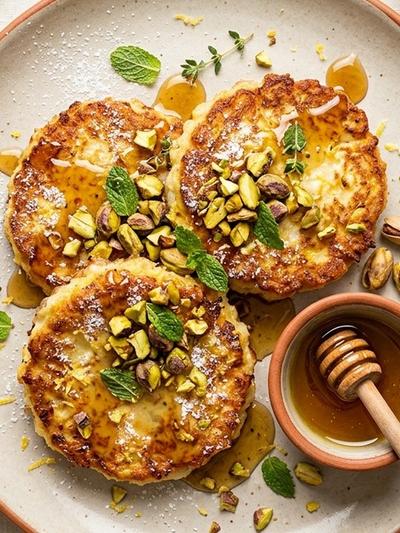
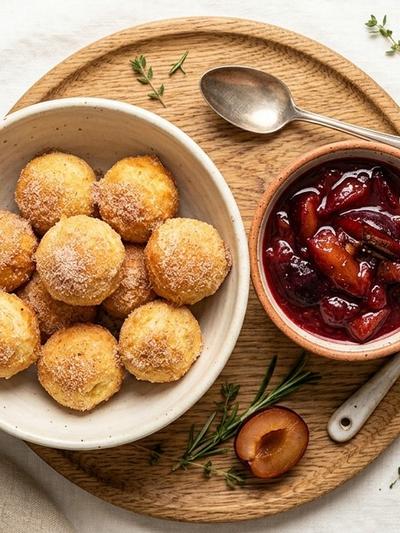
Each serving of these sesame-crusted cottage cheese cakes delivers 26 grams of protein from a combination of low-fat cottage cheese, eggs, and a scoop of vanilla protein powder. The cakes are a high-protein reimagining of Chinese sesame pastries — the fried street-food treats called jiān duī — built on a batter of blended cottage cheese rather than glutinous rice flour. With only 245 calories per serving and 7 grams of fat, they satisfy a sweet craving without the heavy feeling of traditional deep-fried versions.
The flavor profile blends warm Chinese five-spice powder — cinnamon, star anise, clove, fennel, and Sichuan pepper — with a light honey sweetness and the nutty crunch of toasted sesame seeds. Inside, the texture is soft and custard-like, almost like a baked cheesecake, while the outside crisps up beautifully in the air fryer. A small amount of oat flour binds everything together and adds a gentle, wheaty depth that rounds out the spice.
For people on GLP-1 medications like Mounjaro or Ozempic, finding sweets that are genuinely satisfying in small portions is one of the bigger practical challenges. These cakes are dense with protein and naturally portion-controlled — you get three small cakes per serving, which is enough to feel like a real dessert without overwhelming a reduced appetite. The soft interior is also gentle on digestion, and the air fryer method means no greasy aftermath.
Why This Works on GLP-1
The 26 grams of protein per serving comes primarily from cottage cheese and eggs, both complete protein sources containing all essential amino acids. During GLP-1-assisted weight loss, preserving lean muscle mass is critical — research consistently shows that adequate protein intake (at least 25 grams per meal or snack) helps protect against the muscle loss that can accompany rapid weight reduction. These cakes turn a sweet treat into a meaningful protein contribution rather than empty calories.
The low fat content — just 7 grams per serving — is significant for GLP-1 users. High-fat sweets tend to exacerbate the nausea and digestive discomfort that medications like Wegovy and Zepbound can cause, especially in the early titration weeks. By air frying rather than deep frying, you eliminate the oil bath entirely while still achieving a satisfying crunch.
Five-spice powder contains compounds from ginger relatives and warming spices that have traditionally been used to settle the stomach. While the amounts here are small, the aromatic quality of the spice blend makes each bite feel rich and complex, which helps your brain register satisfaction even from a modest portion.
Ingredients (serves 4)
For the cake batter:
- 2 cups (450g) low-fat cottage cheese (2% milkfat)
- 2 large eggs
- 1 scoop (30g) vanilla protein powder (whey or plant-based)
- 1/3 cup (35g) oat flour
- 2 tablespoons (40g) honey
- 1 teaspoon Chinese five-spice powder
- 1/4 teaspoon fine sea salt
- 1 teaspoon vanilla extract
For the coating:
- 3 tablespoons (24g) white sesame seeds
- 1 tablespoon (8g) black sesame seeds (optional, for appearance)
- Cooking spray (avocado or coconut oil)
Instructions
Prepare the batter:
- Add the cottage cheese to a blender or food processor and blend for 30 to 45 seconds until completely smooth with no visible curds. This step is essential — any remaining lumps will prevent the cakes from holding together and create an uneven texture.
- Add the eggs, protein powder, oat flour, honey, five-spice powder, salt, and vanilla extract. Blend again for 15 to 20 seconds until the batter is uniform and pourable, similar to a thick pancake batter.
- Transfer the batter to a bowl and refrigerate for 15 minutes. Chilling firms the batter so the cakes hold their shape during forming and cooking.
Form and coat the cakes:
- Mix the white and black sesame seeds together on a small plate.
- Using a 2-tablespoon measure or small cookie scoop, portion the batter into 12 equal rounds. Roll each gently between wet palms to form a smooth ball, then flatten slightly into a disc about 1/2 inch (1.25cm) thick.
- Press each disc firmly into the sesame seed mixture on both sides, ensuring good coverage. The seeds will toast in the air fryer and form the characteristic golden crust.
Air fry the cakes:
- Preheat your air fryer to 340°F (170°C) for 3 minutes. Line the basket with parchment paper or a silicone liner — this prevents sticking without adding oil.
- Arrange the cakes in a single layer with at least 1/2 inch of space between each one. You will likely need to cook in two batches of six. Lightly mist the tops with cooking spray.
- Air fry for 8 minutes, then carefully flip each cake using a thin spatula. Mist the other side lightly and cook for an additional 6 to 7 minutes until the sesame coating is deep golden and the cakes feel firm when gently pressed.
- Let the cakes rest on a wire rack for 5 minutes before serving. They will firm up further as they cool and develop a more defined texture contrast between the crispy exterior and soft center.
Nutrition per Serving
| Nutrient | Amount (approx.) |
|---|---|
| Calories | ~245 kcal |
| Protein | ~26g |
| Fat | ~7g |
| Carbohydrates | ~20g |
| Fiber | ~2g |
Based on 3 cakes per serving (12 total), using 2% cottage cheese, standard whey protein powder, and commercially available oat flour.
Practical Notes
Cottage cheese brand matters. Use a cottage cheese with small curds and minimal added thickeners for the smoothest batter. Brands with a runnier consistency blend more easily. If your cottage cheese is very thick, add 1 tablespoon of milk to help the blender work. Avoid fat-free varieties — they produce a gummy texture.
Store and reheat with care. Cooked cakes keep in an airtight container in the fridge for up to 4 days. Reheat in the air fryer at 300°F (150°C) for 3 to 4 minutes to restore the crispy exterior. Microwaving works in a pinch but sacrifices the sesame crunch entirely. You can also freeze the uncooked, formed cakes on a parchment-lined tray, then transfer to a freezer bag — cook from frozen at 340°F for 12 to 14 minutes.
Five-spice powder freshness. Chinese five-spice loses its aromatic punch quickly once opened. If your jar has been sitting in the spice drawer for over six months, taste a pinch before using — stale five-spice tastes flat and dusty. You can make your own by grinding equal parts cinnamon, star anise, cloves, fennel seeds, and Sichuan peppercorns.
Serve them warm with a simple dip. A small bowl of plain Greek yogurt mixed with a drizzle of honey and a pinch of five-spice makes an excellent protein-boosting dipping sauce. For a more traditional Chinese approach, a light drizzle of osmanthus syrup or a dusting of matcha powder adds elegance without significant calories.
Adjust sweetness for GLP-1 taste changes. Many people on Zepbound or Mounjaro report that their perception of sweetness shifts — foods taste sweeter than before starting medication. Start with 1 tablespoon of honey instead of 2, taste the batter, and add more only if needed. You can also substitute the honey entirely with a monk fruit sweetener for a lower-calorie version.
Frequently Asked Questions
Will these cakes cause nausea if I eat them shortly after taking my GLP-1 injection?
Can I make these dairy-free or with a different protein source?
How should I store leftovers, and how long do they last?
I can only eat very small portions right now — how should I adjust this recipe?
My air fryer runs hot — how do I prevent the sesame seeds from burning?
This article provides general food and nutrition guidance only. It does not constitute medical advice. Always consult your healthcare provider regarding your GLP-1 medication and individual nutritional needs.