Each serving of this slow cooker pumpkin beef pudding delivers 28 grams of protein and just 315 calories, making it one of the most nutrient-dense sweets you can prepare on a GLP-1 medication. The combination of 96% lean ground beef with pumpkin puree creates a thick, custard-like texture while providing both complete protein and beta-carotene. Rolled oats and chia seeds round out the base with slow-digesting carbohydrates and soluble fiber that won't spike blood sugar.
The flavor profile draws from traditional Mexican desserts — warm canela (true cinnamon), unrefined piloncillo sugar, and a whisper of dark cocoa create a taste reminiscent of champurrado, the thick chocolate-corn drink served at Mexican markets. The pumpkin adds a velvety richness that makes you forget this is a high-protein dish, while the beef practically disappears into the pudding after hours of slow cooking, contributing body and savory depth without any meaty texture.
This recipe works particularly well for GLP-1 users because the slow cooker does all the work — you assemble it in ten minutes and come back to a ready dessert. The small, dense portions feel genuinely indulgent despite their modest calorie count, and the combination of protein, fiber, and complex carbs provides steady energy without the crash that comes from typical sweets.
Why This Works on GLP-1
Preserving lean muscle mass is one of the most important nutritional goals during GLP-1-assisted weight loss, and most sweet treats contribute nothing toward that goal. This pudding delivers 28 grams of complete protein per serving, primarily from lean ground beef, which provides all essential amino acids in highly bioavailable form. For people on Mounjaro or similar GLP-1 medications who find their appetite drastically reduced, getting adequate protein from every eating occasion — including desserts — becomes a practical strategy rather than a luxury. That protein also slows gastric emptying further, extending the satisfied feeling that GLP-1 medications already promote.
The pumpkin puree contributes 7 grams of fiber per serving alongside meaningful amounts of vitamin A and potassium. Pumpkin is one of the gentlest high-fiber foods available — its soluble fiber absorbs water gradually rather than creating the gas and bloating that raw vegetables or beans sometimes cause for GLP-1 users with slowed digestion.
At 315 calories and only 9 grams of fat per serving, this pudding fits comfortably into a calorie-controlled day without requiring you to skip meals to accommodate a sweet. The complex carbohydrates from oats and chia seeds digest slowly, helping maintain stable blood sugar levels — particularly useful for people on Zepbound or other GLP-1 medications who may experience occasional blood sugar dips between meals.
Ingredients (serves 4)
For the pudding base:
- 1 lb (454g) 96% lean ground beef
- 1 can (15 oz / 425g) pure pumpkin puree (not pumpkin pie filling)
- 3/4 cup (60g) rolled oats (not instant)
- 2 tablespoons (20g) chia seeds
- 1 1/2 cups (360ml) unsweetened almond milk
- 2 tablespoons (30g) piloncillo, grated (or dark brown sugar)
- 1 tablespoon (6g) unsweetened cocoa powder
- 1 1/2 teaspoons ground canela or Ceylon cinnamon
- 1 teaspoon pure vanilla extract
- 1/4 teaspoon fine sea salt
- Pinch of cayenne pepper
For serving:
- 2 tablespoons plain Greek yogurt per bowl (optional)
- Light dusting of cinnamon
Instructions
Brown the beef:
- Heat a large nonstick skillet over medium-high heat. Add the ground beef and break it into very small crumbles using a wooden spoon or potato masher — you want pieces no larger than a pea. Cook for 5 to 6 minutes until fully browned and no pink remains. The smaller the crumbles, the more seamlessly they integrate into the pudding texture.
- Drain any rendered fat through a fine-mesh strainer. Transfer the beef to the slow cooker insert.
Assemble the slow cooker:
- Add the pumpkin puree, rolled oats, chia seeds, almond milk, grated piloncillo, cocoa powder, cinnamon, vanilla, salt, and cayenne directly to the slow cooker with the beef. Stir thoroughly to combine — the mixture will look loose and grainy at this stage, which is normal.
- Cover and cook on low for 3 to 4 hours, or on high for 1 1/2 to 2 hours. The pudding is done when the oats have fully softened, the chia seeds have gelled, and the mixture holds its shape on a spoon. Stir once halfway through cooking if possible, though it is not essential.
Finish and serve:
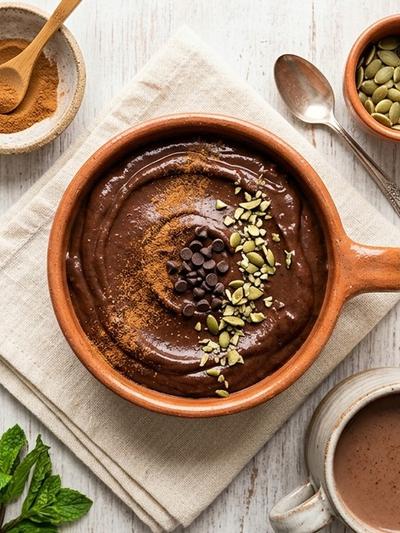
- Remove the lid and stir the pudding vigorously with a fork, breaking up any clumps. The texture should be thick, creamy, and spoonable — similar to a dense rice pudding. If it seems too thick, stir in 2 to 3 tablespoons of almond milk to loosen it.
- Spoon into four small bowls. Top each with a tablespoon of Greek yogurt if desired and a light dusting of cinnamon. Serve warm, at room temperature, or chilled — the pudding thickens further as it cools.
Nutrition per Serving
| Nutrient | Amount (approx.) |
|---|---|
| Calories | ~315 kcal |
| Protein | ~28g |
| Fat | ~9g |
| Carbohydrates | ~31g |
| Fiber | ~7g |
Estimates based on 96% lean ground beef, canned pumpkin puree, rolled oats, unsweetened almond milk, and chia seeds. Greek yogurt topping not included.
Practical Notes
Piloncillo makes a difference but is not essential. Piloncillo is unrefined Mexican cane sugar sold in small cones at Latin grocery stores and many supermarkets. It has a deep, almost smoky caramel flavor that complements pumpkin beautifully. If you cannot find it, dark brown sugar works — use the same amount. Grate piloncillo on a box grater or microplane so it dissolves evenly during cooking.
This pudding improves overnight. The flavors meld and deepen after refrigeration. Store individual portions in airtight containers in the refrigerator for up to 4 days. Reheat in the microwave for 60 to 90 seconds, adding a splash of almond milk to restore the creamy texture, or eat it cold — the chilled version has a firmer, mousse-like consistency that many people prefer.
Use true cinnamon if possible. Canela, also called Ceylon cinnamon, is the variety used in Mexican cooking. It has a softer, more floral flavor than the harsher cassia cinnamon commonly sold in American supermarkets. If you are eating small portions on GLP-1, the quality of your spices matters more — each bite carries more flavor weight.
Start with a half portion if you are in early GLP-1 treatment. During the first weeks on Wegovy or other GLP-1 medications, your stomach capacity may be significantly reduced. A half serving of this pudding still provides 14 grams of protein and makes a satisfying end to a meal. You can always have the rest as a separate snack later in the day.
Freeze individual portions for up to 2 months. Spoon the pudding into silicone muffin molds or small freezer-safe containers. Thaw overnight in the refrigerator or microwave from frozen at 50% power for 2 to 3 minutes. Having a protein-rich sweet ready in the freezer prevents reaching for low-protein convenience snacks on days when cooking feels like too much effort.
Frequently Asked Questions
Can I taste the beef in this pudding?
Can I use a different protein source instead of beef?
How should I store and reheat leftovers?
What if I can only eat very small amounts on my GLP-1 medication?
Can I make this on the stovetop instead of a slow cooker?
This article provides general food and nutrition guidance only. It does not constitute medical advice. Always consult your healthcare provider regarding your GLP-1 medication and individual nutritional needs.