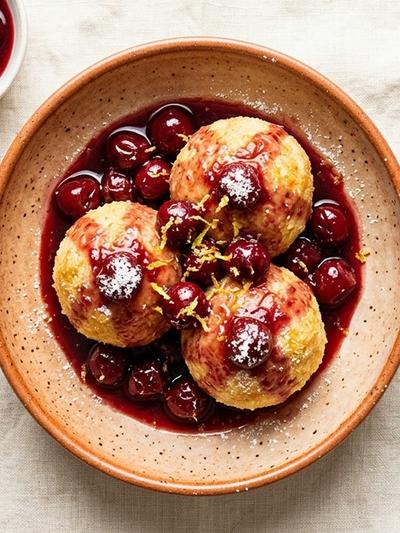
Each serving of this protein-boosted Kaiserschmarrn delivers 33 grams of protein and just 383 calories, built from five egg equivalents, blended cottage cheese, and a scoop of vanilla whey. The combination of complete egg protein and casein from cottage cheese creates a sustained amino acid release that supports muscle preservation during weight loss. A warm compote of mixed berries adds natural sweetness along with vitamin C and anthocyanins. This is a real European dessert with serious nutritional credentials.
Kaiserschmarrn is one of Austria's most beloved desserts — a fluffy, torn pancake somewhere between a soufflé and a crêpe. The secret is beaten egg whites folded into the batter, creating pockets of air that puff in the skillet and turn golden at the edges. Oat flour adds a subtle nuttiness that pairs beautifully with the warm berry compote spooned on top. The result is a dessert that feels indulgent while remaining remarkably light.
For GLP-1 users, this recipe solves a common problem: wanting something sweet without the heaviness that triggers nausea or discomfort. The airy, shredded texture means each bite is easy to eat in small amounts, and the high protein content ensures genuine satiety from a modest portion. The entire dessert comes together in one skillet in under 25 minutes — no special equipment needed beyond a whisk and a nonstick pan.
Why This Works on GLP-1
With 33 grams of protein per serving, this Kaiserschmarrn provides a meaningful dose of muscle-supporting nutrition in dessert form. During GLP-1-assisted weight loss with medications like Mounjaro or Wegovy, the body can lose lean mass alongside fat if protein intake drops too low. Research suggests aiming for 25 to 40 grams of protein per meal to stimulate muscle protein synthesis effectively. This recipe hits that target through eggs, cottage cheese, and whey protein — three sources with complementary absorption profiles that extend amino acid availability over several hours.
The mixed berry compote provides roughly 5 grams of fiber per serving, primarily from the skins and seeds of the berries. This gentle, soluble-dominant fiber supports gut health without the bloating that raw cruciferous vegetables or large bean portions can cause. The berries also contribute potassium and manganese, two micronutrients that GLP-1 users sometimes fall short on due to reduced food volume.
Oat flour brings beta-glucan fiber and a lower glycemic response compared to all-purpose flour, helping prevent the blood sugar spikes that can worsen nausea during the early weeks on Zepbound or similar medications. At under 400 calories per generous serving, this dessert fits comfortably into a calorie-conscious day while still feeling like a genuine treat rather than a diet compromise.
Ingredients (serves 2)
For the Kaiserschmarrn batter:
- 3 large eggs, separated
- 2 large egg whites
- 1/3 cup (75g) low-fat cottage cheese
- 1 scoop (30g) vanilla whey protein powder
- 3 tablespoons (24g) oat flour
- 2 teaspoons (8g) granulated sugar
- 3 tablespoons (45ml) whole milk
- 1/2 teaspoon vanilla extract
- Zest of 1/2 lemon
- Pinch of fine sea salt
- Nonstick cooking spray
For the warm berry compote:
- 1 1/2 cups (225g) mixed berries (raspberries, blueberries, and strawberries), fresh or frozen
- 2 teaspoons honey
- 1 teaspoon lemon juice
- Pinch of ground cinnamon
For serving:
- 2 teaspoons powdered sugar, for dusting
Instructions
Make the berry compote first:
- Add the mixed berries, honey, lemon juice, and cinnamon to a nonstick skillet over medium heat. If using frozen berries, no need to thaw first — they release liquid as they warm. Cook for 4 to 5 minutes, stirring occasionally, until the berries soften and form a loose, jammy sauce. Halve any large strawberries with a spoon as they cook. Transfer the compote to a small bowl and set aside. Wipe the skillet clean with a paper towel.
Prepare the batter:
In a medium bowl, whisk together the 3 egg yolks, cottage cheese, milk, vanilla extract, and lemon zest until smooth. The cottage cheese should be fully blended — a few small curds are fine, but you want a mostly uniform base. Sift in the oat flour and protein powder and stir until just combined. Do not overmix.
In a separate clean bowl, combine the 3 egg whites from the separated eggs plus the 2 additional egg whites (5 whites total) with the sugar and salt. Beat with a hand whisk or electric mixer until stiff peaks form — this takes about 2 minutes with an electric mixer or 4 minutes by hand. The whites should hold their shape when you lift the whisk. This step creates the signature airy texture of Kaiserschmarrn, so take the time to whip them properly.
Gently fold one-third of the whipped whites into the yolk mixture to lighten it. Then fold in the remaining whites in two additions, using a large spatula and turning the bowl as you fold. Stop as soon as no white streaks remain — overfolding deflates the batter and produces a dense pancake rather than a fluffy one.
Cook the Kaiserschmarrn:
Coat the same skillet generously with cooking spray and set it over medium heat. When the pan is warm, pour the batter in and spread it gently to an even layer. Cover with a lid or large plate and cook for 3 to 4 minutes, until the bottom is golden brown and the edges begin to set. The top will still look slightly wet — that is normal.
Using two spatulas or a spatula and fork, tear the pancake into rough, irregular pieces about the size of a walnut. This tearing is the defining technique of Kaiserschmarrn — the jagged edges create more surface area for caramelization. Flip and toss the pieces gently, then cook uncovered for another 3 to 4 minutes, turning occasionally, until all sides develop golden-brown edges and no wet batter remains.
Divide the torn Kaiserschmarrn between two plates. Spoon the warm berry compote alongside or over the top. Dust lightly with powdered sugar and serve immediately. The airy texture deflates as it sits, so this is best eaten right away.
Nutrition per Serving
| Nutrient | Amount (approx.) |
|---|---|
| Calories | ~383 kcal |
| Protein | ~33g |
| Fat | ~12g |
| Carbohydrates | ~34g |
| Fiber | ~5g |
Estimates based on large eggs, low-fat cottage cheese, standard vanilla whey protein isolate (24g protein per 30g scoop), and fresh mixed berries. Actual values vary by brand of protein powder and specific berry mix used.
Practical Notes
Cottage cheese texture matters. For the smoothest batter, use a small-curd cottage cheese and blend it with the egg yolks using an immersion blender or mini food processor. If you only have large-curd, press it through a fine-mesh sieve before adding to the bowl. A few remaining curds will not affect the taste, but they create visible white spots in the finished pancake.
Whip the egg whites just before cooking. Beaten egg whites begin to deflate within minutes, especially in warm kitchens. Have your skillet and cooking spray ready before you start whipping. If the whites sit too long, the Kaiserschmarrn loses its signature puff and becomes more like a dense crepe — still edible, but missing the light texture that makes this dessert special.
Frozen berries work perfectly for the compote. In fact, frozen mixed berries often produce a better compote than fresh because they release more juice as they thaw and cook down. This also makes the recipe practical year-round without depending on seasonal berry prices. Thaw them slightly in the microwave for 30 seconds before adding to the skillet if you want faster results.
Scale down for early GLP-1 phases. If your appetite allows only a few bites, make the full recipe and refrigerate the leftover torn pieces in an airtight container. They reheat surprisingly well in a dry skillet over medium heat for 2 minutes per side — the pieces crisp up again at the edges. Store the compote separately and warm it in the microwave for 20 seconds before serving.
Traditional variations to try. Classic Viennese Kaiserschmarrn often includes 2 tablespoons of rum-soaked raisins folded into the batter — this adds about 25 calories per serving and brings an authentic touch. For a nut-forward version, scatter 1 tablespoon of sliced almonds over the pieces during the final minute of cooking. Both additions complement the berry compote beautifully.
Frequently Asked Questions
Can I eat this Kaiserschmarrn if I experience nausea on GLP-1 medication?
What can I use instead of whey protein powder?
How long does leftover Kaiserschmarrn keep, and how should I store it?
I can only eat a few bites at a time — is this still worth making?
Why do I need to separate the eggs and whip the whites?
This article provides general food and nutrition guidance only. It does not constitute medical advice. Always consult your healthcare provider regarding your GLP-1 medication and individual nutritional needs.