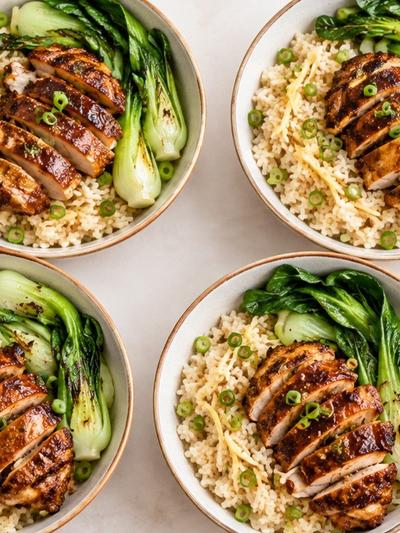
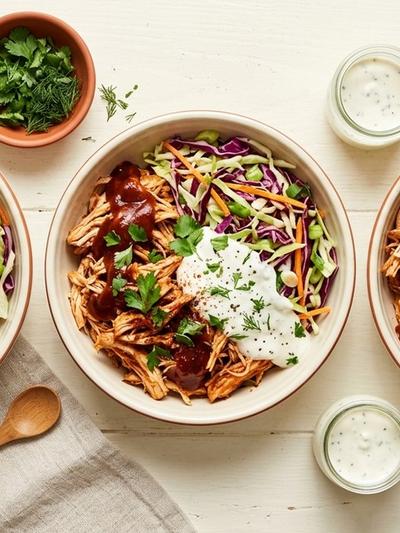
GLP-1 medications change your relationship with food in ways that make traditional meal planning inadequate. When your appetite is suppressed and decision fatigue sets in simultaneously, the last thing you can afford is standing in front of the refrigerator trying to figure out what to cook. The solution is not variety for its own sake — it is having the right protein already cooked and ready in formats that work for different meal types throughout the week.
This system uses 1.5kg (3.3 lbs) of chicken breast cooked three different ways in a single Sunday session. The result is a refrigerator stocked with sliced roasted chicken for grain bowls, shredded poached chicken for soups and wraps, and marinated grilled chicken for direct eating. Each portion delivers approximately 40g of protein. When your body is signaling that it does not want much food, every bite needs to count.
The three-format approach solves a specific GLP-1 problem: food fatigue. Eating the same texture every day becomes unpleasant quickly, which compounds the appetite suppression many users experience. Having three distinct textures and flavor profiles from the same basic ingredient keeps eating from becoming a chore.
Why This Works on GLP-1
Chicken breast is the most efficient protein source for GLP-1 users: it has the highest protein-to-calorie ratio of any common meat, meaning you get maximum protein from minimum volume. When stomach capacity is reduced, volume efficiency matters. At roughly 165 calories per 150g serving with 40g protein, chicken breast achieves what no other food category can match gram for gram.
The batch cooking format eliminates the preparation barrier that often causes GLP-1 users to skip protein entirely. Skipping protein on low-appetite days on Zepbound or Wegovy creates a deficit that compounds over the week — muscle catabolism accelerates, energy drops, and the cycle of undereating worsens. Having ready-to-eat protein removes the preparation hurdle on exactly the days when eating feels hardest.
Three formats also mean three different meal contexts, which prevents the monotony that leads to giving up on a prep system entirely.
Ingredients
Oven-Roasted Batch (for slicing)
- 500g (1.1 lbs) chicken breast
- 30ml (2 tbsp) olive oil
- 5g (1 tsp) garlic powder
- 5g (1 tsp) smoked paprika
- 5g (1 tsp) sea salt
- 2.5g (½ tsp) black pepper
Poached Batch (for shredding)
- 500g (1.1 lbs) chicken breast
- 1 litre (4 cups) low-sodium chicken broth
- 2 bay leaves
- 4 garlic cloves, crushed
- 5g (1 tsp) black peppercorns
- 3 sprigs fresh thyme
Marinated Grilled Batch (for direct eating)
- 500g (1.1 lbs) chicken breast
- 45ml (3 tbsp) soy sauce (low sodium)
- 30ml (2 tbsp) olive oil
- 30ml (2 tbsp) lemon juice
- 15ml (1 tbsp) honey
- 4 garlic cloves, minced
- 5g (1 tsp) dried oregano
Instructions
Preheat oven to 200°C (400°F). Place the marinade-batch chicken in a zip-lock bag with all marinade ingredients. Seal and refrigerate. Begin the oven-roasted batch first since it takes longest.
Prepare oven-roasted batch: Pat chicken dry, coat with olive oil, then rub with garlic powder, paprika, salt, and pepper. Place on a foil-lined baking sheet. Roast 22–26 minutes until internal temperature reaches 74°C (165°F). Rest 10 minutes, then slice into 1.5cm (½ inch) strips against the grain. Cool completely before refrigerating.
Poach the second batch: While the oven batch cooks, bring broth to a gentle simmer in a large pot. Add bay leaves, garlic, peppercorns, and thyme. Add chicken breasts. Maintain a bare simmer — not a rolling boil — for 18–22 minutes. Remove chicken. Reserve and refrigerate the poaching broth (it is now excellent chicken stock). Shred chicken using two forks. Season with a pinch of salt.
Grill the marinated batch: Remove marinated chicken from refrigerator. Heat a grill pan or outdoor grill to medium-high. Cook 6–8 minutes per side until internal temperature reaches 74°C (165°F). Rest 5 minutes, then slice or serve whole. Cool completely before storing.
Package for storage: Divide each batch into individual portions of approximately 150g (5.3 oz). Label containers clearly: "Sliced — bowls," "Shredded — soups/wraps," "Grilled — direct."
Nutrition per Serving
Approximate values per 150g (5.3 oz) portion:
| Oven-Roasted | Poached | Grilled | |
|---|---|---|---|
| Calories | ~195 | ~165 | ~210 |
| Protein | ~40g | ~38g | ~40g |
| Fat | ~5g | ~3g | ~7g |
| Carbs | ~1g | ~0g | ~4g |
Storage & Usage Guide
Refrigerator storage: All three formats keep for 4–5 days in airtight containers. Store poaching broth separately in a jar for up to 5 days.
Freezer storage: Sliced and shredded batches freeze well for up to 3 months. Grilled chicken loses some texture when frozen but remains perfectly edible. Freeze in individual portions to avoid thawing more than needed.
Weekly usage:
- Sliced roasted: grain bowls, salads, wraps with pre-washed greens
- Shredded poached: add to broth for instant soup, fold into wraps, top rice or quinoa
- Grilled: eat cold directly from container, pair with a handful of roasted vegetables
The poaching broth becomes the base for a 10-minute weekday soup: heat broth, add shredded chicken, add any pre-chopped vegetables, season. Complete protein meal in under 15 minutes.
Practical Notes
Weigh portions before refrigerating. On GLP-1, portion distortion works both ways — you may eat too little and miss protein targets. Pre-weighed containers remove guesswork on low-appetite days.
Eat the grilled batch first. It has the most perishable texture after the first 24 hours. Save poached/shredded for mid-week, since it rehydrates easily in broth.
Cold chicken is fine. GLP-1 users often find that reheating food is a friction point that leads to skipping meals. Cold sliced chicken on a bowl of cold quinoa is a complete, adequate meal. Permit yourself not to heat it.
Use the poaching broth. Do not discard it. This broth contains collagen and minerals and can be sipped directly on hard eating days when solid food feels impossible.
Scale to your week. If 1.5kg is more than you need, start with 1kg split two ways. The system scales down without sacrificing the core benefit: protein ready with zero decision-making.
Batch marinating takes 10 minutes. Put the third batch in its marinade on Saturday night and refrigerate overnight. Sunday becomes a 45-minute active session rather than 90 minutes.
Frequently Asked Questions
Which of the three methods is easiest to eat on low-appetite or nausea days?
Can I scale this system down if 1.5kg is more than I can eat in a week?
How do I prevent the oven-roasted chicken from drying out during storage?
Can I use any of these three formats on injection days?
Does the marinated grilled batch work for someone who finds strong flavors unappealing on GLP-1?
This article provides general food and nutrition guidance only. It does not constitute medical advice. Always consult your healthcare provider regarding your GLP-1 medication and individual nutritional needs.