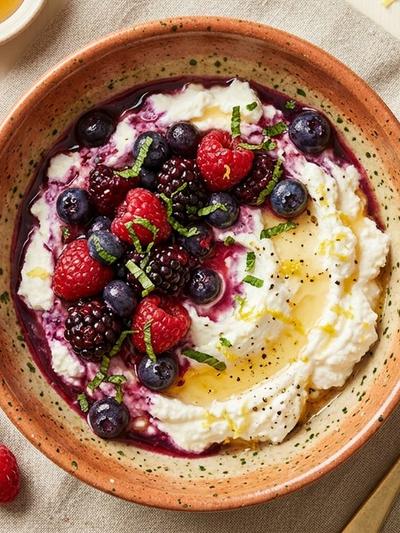
There is a version of breakfast that requires almost nothing from you — no cooking, no equipment, no decisions about quantities or combinations — and still delivers a solid protein hit in a gentle, appealing format. The blueberry cottage cheese bowl is that version. Four ingredients. Two minutes. One bowl to wash. On days when GLP-1 medication has narrowed your appetite window to a brief ten minutes in the morning, this is the breakfast that actually gets eaten.
The recipe is almost too simple to require a recipe. But the thinking behind it — why these four ingredients, why in these proportions, why this works specifically for GLP-1 — is worth laying out. Because understanding why a food works for your situation is what turns a recipe into a habit.
Full-fat cottage cheese is the anchor. It is often overlooked in favor of Greek yogurt as the default high-protein soft food, but cottage cheese has some meaningful advantages. The casein protein in cottage cheese digests more slowly than the whey in Greek yogurt, providing a steadier amino acid release over 2–4 hours. This is particularly useful for GLP-1 users who may not eat again for a long stretch. Full-fat versions also have a creamier, gentler texture that many people find easier to eat on sensitive mornings than the slight tang of Greek yogurt.
Why This Works on GLP-1
Cottage cheese delivers approximately 11g of protein per 100g — and 200g of it, which is a reasonable serving, provides 22g of protein in under 200 calories. This protein-to-calorie ratio is among the best of any whole food, which is why it features prominently in GLP-1 nutrition recommendations.
Blueberries add fiber, antioxidants, and natural sweetness without a large carbohydrate load. Frozen blueberries thawed overnight or microwaved for 60 seconds release their juice, which pools into the cottage cheese and creates a natural sauce — no additional sugar or syrup needed. The anthocyanins in blueberries also have anti-inflammatory properties that support gut health, which is relevant for GLP-1 users managing GI sensitivity common during Mounjaro or Wegovy titration.
Walnuts add healthy fat, additional protein (4g per 20g), and a textural contrast. The fat in walnuts slows gastric emptying slightly, which GLP-1 already does — but in small quantities, the additional fat extends satiety without causing discomfort. Walnuts are also one of the richest dietary sources of ALA omega-3 fatty acids, which supports the anti-inflammatory approach most GLP-1 practitioners recommend.
The honey is optional but purposeful: a small amount bridges the flavor between the mild savory note of cottage cheese and the sweet-tart blueberries.
Ingredients (serves 1)
- 200g (¾ cup + 2 tbsp) full-fat cottage cheese
- 80g (½ cup) blueberries — fresh, or frozen and thawed
- 1 teaspoon honey (optional)
- 20g (small handful) walnuts, roughly broken
Instructions
Thaw the blueberries if frozen. Place frozen blueberries in a small bowl and microwave for 60 seconds, or thaw overnight in the fridge. The berries will release their juice, creating a natural purple sauce. This step takes almost no active time — do it the night before while making dinner, or in 60 seconds while the kettle boils.
Spoon the cottage cheese into a bowl. Use a wide, shallow bowl rather than a deep one — the texture of cottage cheese is easier to eat from a wider surface, and visually, the bowl looks more complete and appetizing.
Add toppings. Spoon the blueberries (and all their released juice) over the cottage cheese. Drizzle the honey across the top. Scatter the broken walnuts around the edges.
Eat immediately or refrigerate for up to 4 hours (the cottage cheese will weep slightly but remains perfectly edible and nutritious).
Nutrition per Serving
- Calories: ~280
- Protein: ~22g
- Fat: ~12g
- Carbs: ~20g
- Fiber: ~2g
Practical Notes
This is a template, not a fixed recipe. Swap blueberries for any berry (strawberries, raspberries, blackberries). Replace walnuts with almonds, pumpkin seeds, or skip them entirely. Add a tablespoon of chia seeds for additional fiber. The cottage cheese base is the constant — everything else rotates based on what's available and what sounds appealing that day.
Pre-portion containers the night before. Spoon 200g of cottage cheese into 5 small containers on Sunday evening. Each morning, add berries and nuts. This takes the last remaining decision out of breakfast on difficult mornings.
Blended cottage cheese for texture sensitivity. If the curdy texture of cottage cheese is difficult, blend it smooth with an immersion blender before adding toppings. Blended smooth, it has the consistency of a thick Greek yogurt and the flavor becomes even milder. The protein content is identical.
Cottage cheese vs. Greek yogurt. Both are excellent GLP-1 foods, but they serve different days. On days when you need something very mild and minimally tart, cottage cheese wins. On days when you want something with a bit more body and tang, Greek yogurt is the better choice. Keep both in the fridge and let your appetite guide the choice.
When 200g feels like too much. Start with 100g. Even a half-portion of this bowl delivers 11g of protein. On very difficult appetite days, eating half and stopping is a success — not a failure.
Frequently Asked Questions
Can I use Greek yogurt instead of cottage cheese if I prefer it?
The curdy texture of cottage cheese is hard for me to eat — is there a fix?
Are frozen blueberries as nutritious as fresh?
How many days in advance can I prep this breakfast?
Should I be concerned about the fat content if I'm actively trying to lose weight on GLP-1?
This article provides general food and nutrition guidance only. It does not constitute medical advice. Always consult your healthcare provider regarding your GLP-1 medication and individual nutritional needs.