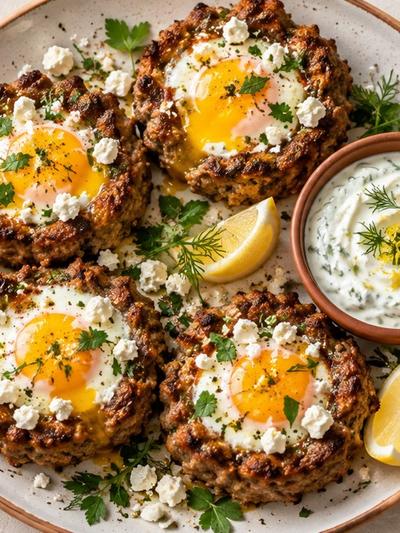
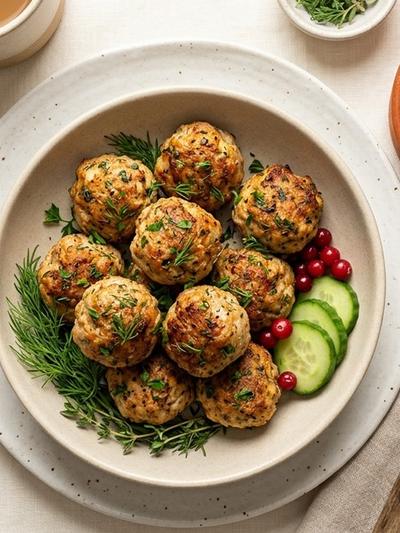
These Tunisian-spiced breakfast cakes pack 32 grams of protein per serving by combining lean ground turkey with mashed white beans — a North African pantry staple that adds body and gentle fiber without weighing down the patty. Each three-cake serving delivers a complete, satisfying breakfast at just 268 calories, with the air fryer providing a golden crust that would normally require pan-frying in oil. The cannellini beans contribute both binding power and slow-digesting carbohydrates that help maintain steady energy through the morning.
The spice profile draws from Tunisian tabil — a traditional blend built on caraway, coriander, and a touch of dried rose harissa that gives each cake a toasty warmth without aggressive heat. Fresh lemon zest cuts through the richness of the turkey, while a small amount of grated onion keeps the interior moist as the air fryer circulates hot air around the patties. The result is a cake that's crisp and deeply browned on the outside with a tender, almost fluffy center.
For GLP-1 users, these breakfast cakes solve a common morning problem: getting enough protein when appetite is at its lowest. Each cake is compact — about the size of a thick hockey puck — so you can eat one or two if appetite is limited and save the rest. The air fryer format means zero added cooking oil, and the 15-minute cook time makes this practical even on weekday mornings.
Why This Works on GLP-1
Each serving delivers 32 grams of protein primarily from lean ground turkey, which provides roughly 64 percent of the protein content, with white beans contributing the remainder. This level of protein intake at breakfast is critical during Mounjaro or Ozempic-assisted weight loss, where the body's reduced caloric intake can accelerate muscle loss if protein consumption drops too low. Research consistently shows that front-loading protein at breakfast helps preserve lean mass and supports satiety throughout the day, which complements the appetite-suppressing effects of GLP-1 medications.
The white beans add 4 grams of fiber per serving — enough to support digestive regularity without the bloating that higher-fiber ingredients like raw cruciferous vegetables can cause. Cannellini beans are among the gentlest legumes on the digestive system, and mashing them into the patty mixture breaks down their structure further, making them even easier to tolerate during the early weeks of GLP-1 treatment.
The Tunisian spice profile offers an additional practical benefit: caraway and coriander are both traditional digestive aids in North African cuisine. These aromatic seeds have been used for centuries to ease stomach discomfort, making them a thoughtful choice for a population that commonly experiences GLP-1 side effects like nausea and digestive sensitivity.
Ingredients (serves 4)
For the turkey cakes:
- 1¼ lb (565g) lean ground turkey (93% lean)
- 1 can (15 oz / 425g) cannellini beans, drained and rinsed
- 1 large egg
- 2 tablespoons grated yellow onion (about ¼ small onion)
- 1 teaspoon ground caraway
- 1 teaspoon ground coriander
- ½ teaspoon smoked paprika
- ½ teaspoon ground cumin
- ¼ teaspoon cayenne pepper
- 1 teaspoon fine sea salt
- ½ teaspoon black pepper
- Zest of 1 lemon
- 2 tablespoons finely chopped fresh flat-leaf parsley
For the caraway yogurt:
- ½ cup (120g) plain nonfat Greek yogurt
- 1 tablespoon fresh lemon juice
- ¼ teaspoon ground caraway
- 1 small clove garlic, finely grated
- Pinch of salt
For serving:
- Fresh parsley leaves
- Lemon wedges
- Pinch of smoked paprika
Instructions
Make the caraway yogurt:
- Stir together the Greek yogurt, lemon juice, ground caraway, grated garlic, and salt in a small bowl. Cover and refrigerate while you prepare the cakes — the flavors improve as they sit.
Prepare the turkey cake mixture:
Place the drained cannellini beans in a large mixing bowl and mash them with a fork until mostly broken down but still slightly chunky. Some texture helps the cakes hold together in the air fryer, so avoid making a completely smooth paste.
Add the ground turkey, egg, grated onion, caraway, coriander, smoked paprika, cumin, cayenne, salt, pepper, lemon zest, and chopped parsley to the bowl. Mix with your hands or a sturdy spatula until just combined — overmixing will make the cakes dense rather than tender.
Divide the mixture into 12 equal portions (about 2½ oz / 70g each). Shape each into a flat cake roughly 2½ inches (6cm) across and ¾ inch (2cm) thick. Slightly flatten the centers, which helps them cook evenly since the edges crisp faster in the air fryer.
Air fry the cakes:
Preheat your air fryer to 375°F (190°C) for 3 minutes. Lightly mist the basket or tray with cooking spray — this prevents sticking without adding significant calories.
Arrange the cakes in a single layer with at least ½ inch (1cm) of space between each one. Air circulation is what creates the crust, so avoid crowding. You will likely need to cook in two batches of 6 cakes each.
Air fry for 8 minutes, then carefully flip each cake using a thin spatula. Cook for an additional 6–7 minutes until the internal temperature reaches 165°F (74°C) and the exterior is golden brown and firm to the touch.
Transfer the finished cakes to a plate and repeat with the second batch if needed.
Serve:
- Plate 3 cakes per serving with a generous spoonful of caraway yogurt alongside. Garnish with fresh parsley, a dusting of smoked paprika, and a lemon wedge for squeezing.
Nutrition per Serving
| Nutrient | Amount (approx.) |
|---|---|
| Calories | ~268 kcal |
| Protein | ~32g |
| Fat | ~8g |
| Carbohydrates | ~17g |
| Fiber | ~4g |
Nutrition calculated based on 93% lean ground turkey, canned cannellini beans, and nonfat Greek yogurt. Values may vary slightly based on specific brands used.
Practical Notes
Meal prep friendly. These cakes refrigerate well for up to 4 days in an airtight container. Reheat in the air fryer at 350°F (175°C) for 4–5 minutes to restore the crust — microwaving works in a pinch but sacrifices the texture that makes these special.
Adjust the batch size to your appetite. If you are in the early weeks of Wegovy or another GLP-1 medication and find three cakes too much, start with one or two and refrigerate the rest. The protein density means even a single cake delivers over 10 grams of protein, which is a meaningful breakfast contribution when appetite is severely suppressed.
Swap the beans if needed. Great Northern beans or butter beans work equally well here. Chickpeas can substitute but produce a slightly denser cake. Avoid kidney beans — their stronger flavor competes with the delicate Tunisian spicing.
Freeze for longer storage. Flash-freeze the cooked cakes on a parchment-lined baking sheet until solid, then transfer to a freezer bag. They keep for up to 2 months. Reheat from frozen in the air fryer at 360°F (180°C) for 8–10 minutes with no need to thaw first.
Ground caraway matters. Whole caraway seeds are readily available, but they create an uneven texture in the cakes. If you only have whole seeds, toast them in a dry pan for 30 seconds and grind in a spice grinder. Pre-ground caraway from the spice aisle works perfectly and saves a step.
Frequently Asked Questions
Can I eat these if I'm experiencing nausea from my GLP-1 medication?
Can I use ground chicken instead of turkey?
How should I store and reheat these for weekday breakfasts?
What if I can only eat very small portions right now?
My air fryer runs hot — how do I prevent the outside from burning before the inside cooks through?
This article provides general food and nutrition guidance only. It does not constitute medical advice. Always consult your healthcare provider regarding your GLP-1 medication and individual nutritional needs.