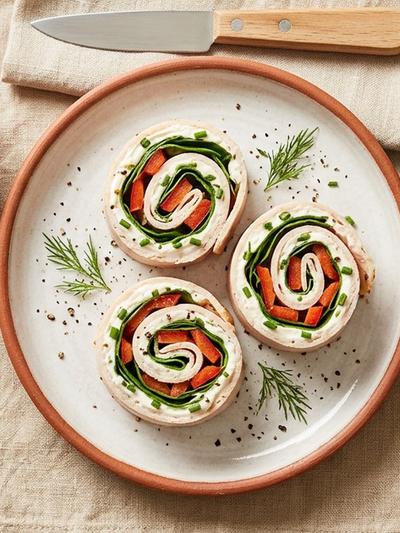
Portability is a genuine nutritional challenge for people on GLP-1 medications. The medication does its job regardless of whether you are at a desk, in a car, or at a worksite — appetite narrows on schedule, and if there is no suitable food available at that moment, the window closes. Turkey and cucumber roll-ups solve this problem directly. They require no cooking, assemble in under ten minutes, pack flat into any container, and can be eaten in three bites each, making them practical whether appetite is strong or absent.
The architecture of the roll-up is simple but deliberate. Sliced turkey breast — the deli or fresh-sliced variety — serves as the wrapper, replacing bread or tortillas entirely. This eliminates carbohydrates while keeping the format recognizable and easy to eat. Hummus spread directly on the turkey provides adhesion, adds chickpea-based protein and fiber, and contributes the fat necessary to slow digestion and extend satiety. Thin cucumber strips add crunch and hydration. Baby spinach provides folate, iron, and a slight bitter note that balances the savory turkey.
The result is a lunch format with an extraordinary protein-to-calorie ratio. Four roll-ups deliver approximately 24 grams of protein at around 160 calories — numbers that are difficult to match in any food format that requires no cooking. For GLP-1 users tracking protein intake carefully against a reduced caloric baseline, this matters.
Why This Works on GLP-1
The zero-carbohydrate structure of this meal is worth explaining in context. GLP-1 medications such as Ozempic and Zepbound are not inherently low-carb therapies — carbohydrates are not the problem. The issue is that refined carbohydrates (bread, crackers, tortillas) occupy stomach volume without contributing meaningful protein, and for users who can comfortably eat only 200–300 calories at lunch, every calorie needs to carry nutritional weight. Replacing the wrap with turkey breast redirects that caloric space toward protein.
Turkey breast is among the leanest animal proteins available: approximately 29 grams of protein per 100 grams with under 2 grams of fat. Combined with the 4–5 grams of protein in 2 tablespoons of hummus, a 4-roll serving provides protein that can sustain muscle protein synthesis across the afternoon.
Cucumber deserves mention for its hydration content — it is roughly 96% water by weight. GLP-1 medications can suppress thirst signaling alongside appetite in some users, making adequate hydration an active concern. Incorporating water-rich vegetables into meals contributes to fluid intake without requiring deliberate effort.
Spinach rounds the micronutrient profile with iron, calcium, and vitamin K — nutrients that become more important per gram of food consumed when overall intake is reduced.
Ingredients (serves 2 — makes 8 roll-ups)
- 8 slices (about 6 oz / 170g) high-quality turkey breast, deli-sliced or fresh-sliced thin
- 4 tablespoons (60g) plain hummus (store-bought or homemade)
- ½ English cucumber, cut into thin matchsticks approximately 3 inches / 8cm long
- 1 cup (30g) baby spinach leaves
- Optional: cracked black pepper, a few drops of hot sauce (omit on sensitive days), or thin strips of roasted red pepper for added color
Instructions
Lay the turkey slices flat on a clean cutting board or large plate. Work with one slice at a time. If the slices are very thin, slightly overlapping two slices to create a larger surface works well.
Spread approximately ½ tablespoon (7–8g) of hummus across each slice, leaving a ½-inch margin at the far edge so the roll seals cleanly.
Place 3–4 cucumber matchsticks in a row across the near third of the turkey slice, parallel to the bottom edge. Keep the cucumber towards the edge you will roll from — this positions it at the center of the finished roll.
Lay 3–4 baby spinach leaves flat on top of the cucumber. Press lightly so they adhere to the hummus layer.
Add any optional ingredients at this stage — a strip of roasted red pepper, a crack of black pepper, or a drop of hot sauce.
Starting from the edge with the fillings, roll the turkey tightly and firmly away from you. The hummus acts as a sealant. The roll should be snug but not so tight that filling bursts out the ends.
Place seam-side down on the serving plate or in the container. Repeat with remaining slices.
Serve immediately, or pack into an airtight container with the seam side down to prevent unrolling. They keep refrigerated for up to 24 hours, though the cucumber will release some moisture over time.
Nutrition per Serving (4 roll-ups)
| Nutrient | Amount (approx.) |
|---|---|
| Calories | ~160 kcal |
| Protein | ~24g |
| Fat | ~5g |
| Carbohydrates | ~7g |
| Fiber | ~2g |
Based on 85g turkey breast, 2 tbsp hummus, cucumber, and spinach per serving.
Practical Notes
Use full-sized deli turkey, not pre-packaged shaved turkey. Thin, wide slices roll without cracking. Pre-packaged shaved turkey is too irregular in shape for clean rolls. Ask for turkey sliced at a medium thickness (not tissue-thin) at the deli counter for the best result.
Separate roll-ups with parchment when packing. Stack roll-ups with a small piece of parchment between each one to prevent them from sticking together in a container. This makes eating individual roll-ups easy — useful when appetite arrives and then departs quickly mid-meal.
Keep hummus separate for maximum freshness. If preparing more than 24 hours in advance, pack the hummus in a small separate container and assemble just before eating. The hummus hydrates the turkey slice over time, which softens the texture.
Control sodium carefully. Deli turkey can be high in sodium — check labels and choose lower-sodium varieties when available. Hummus also contains sodium. If sodium is a concern, use rinsed, home-cooked chickpeas blended with tahini and lemon as a hummus substitute.
Scale easily for higher-appetite days. Six roll-ups bring protein to approximately 36 grams and calories to around 240 — still a very efficient lunch that adds meaningful protein without excessive volume.
Pair with a small cup of broth on low-appetite days. If four roll-ups feel like too much solid food, eat two with a cup of warm low-sodium broth. The broth adds warmth and fluid without competing with the protein priority of the roll-ups.
Frequently Asked Questions
Can I substitute hummus with something else if I don't have it on hand?
How do I keep the rolls from unrolling in my lunch bag?
Is this recipe suitable for people who are also managing type 2 diabetes alongside GLP-1 therapy?
What if I want more calories on a higher-appetite day?
My turkey slices are too small to roll — what's the best fix?
This article provides general food and nutrition guidance only. It does not constitute medical advice. Always consult your healthcare provider regarding your GLP-1 medication and individual nutritional needs.